Posts

Showing posts with the label aberdeenshire

Going for a Screw in Inverurie - by Duncan Harley
Image
One of the joys of living in Inverurie a couple of decades ago was the proliferation of local businesses, both small and large, all willing in varying degrees to take that extra step to help the customer spend their money wisely. An aunties family ran an ironmonger in the square and, despite competition from Watsons across the road managed to deliver a decent range of goods and maintain a loyal customer base before abandoning ironmongery in favour of fancy goods and ornaments a few years ago. Mitchells Dairy, in what is now a punk pub, was still delivering milk and feeding shopworkers and shoppers in a lunchtime cafe. And even the banks somehow managed, in a pre-internet age, to cater for local needs. If you knew the lady behind the counter, you were a sure cert’ for a loan. Nowadays the town is going the way of Aberdeen with big brand betting shops, letting agencies and charity outlets littering the High Street. And there are retail parks full of overpriced Nationals offering stuff ...

Bovine Population – by Duncan Harley

Image
You may have stumbled upon the writings of Melanie Reid of Spinal Column fame. Injured in an equine fall and now as recovered as she can be, she writes Notebook for The Times. And a good thing too. Always entertaining and always reflective she pens useful words. Today’s Notebook column leads with the economic disaster facing the Campbeltown Creamery. A farmer-led crowdfunding appeal has failed and the century old enterprise seems likely to close with both job losses and consequent effects for a west coast economy dependant mainly on fishing and tourism. In short, this end-game will have grave consequences for the 29 or so Mull of Kintyre farms who up until now routinely sent their milk for processing prior to shipment to the multitude of Tesco and Morrisons outlets up and down the land. She writes eloquently about ‘The ripples of human misery which accompany such change’ and states that ‘Scotland’s bovine population is at its lowest since 1957.’ I have no insight as to the sourc...

The Crucible @ HMT Aberdeen - Duncan Harley reviews

Image
The last Scottish witch met a fiery end at Dornoch in 1727 ending what some saw as the domination of the devil in local affairs. Smeared with tar following a short trial, Janet Horne was burned alive in a barrel following an accusation of consorting with the forces of darkness.   In 1950’s America however, the devil-incarnate took the form of McCarthyism  – perhaps best defined as the practice of making accusations of subversion or treason without proper regard for evidence. Many intellectuals, artistic folk and politicians fell foul of the new inquisition. And Arthur Miller’s play The Crucible took an allegorical stab at that modern-day witch hunt against those accused of the crime of ‘Un-American activities’ using the medium of the Salem Witch Trials of the 17 th century. And now, this no-holds barred portrayal of the righteous paranoia that was McCarthyism is subject to fresh interpretation by Scottish Ballet. Shocking in its intensity, this exquisite take on ...

Lady Chatterley's Lover - by Duncan Harley

Image
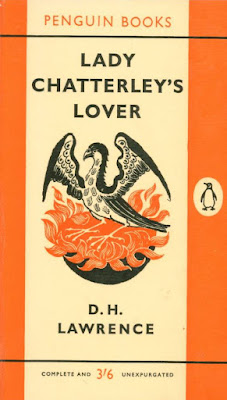
The media today reported on the export ban placed on the original annotated High-Court copy of Lady Chatterley’s Lover. Seemingly, if anyone in the land has a deep-enough wallet, then the actual copy used on the bench during the landmark 1960 obscenity trial can be had for a measly £56,250 or thereabouts. For those not in the know, the novel was penned just prior to D.H. Lawrence’s death in 1930 – well I suppose that would be a given really. Eventually published by Penguin some 30 years later the lusty tome became an underground sensation as both inquisitive schoolboys and curious adults swapped secret dog-eared copies in the hope of finding out what the lady did with the gamekeeper in the bushes behind the big house. A Crown Prosecution followed under the Obscene Publications Act and sales rocketed when the case was decided by a jury who took just a few hours to decide that the content did not deprave or corrupt anyone in the land. A permissive 1960’s society had seemingly t...

Air Raids and Sardines - by Duncan Harley

Image
It's amazing what you learn in a pub.  Although the Garioch town of Inverurie was never bombed during WW2 many, now elderly, survivors of those stressful days vividly recall being shepherding by  panicked primary school teachers towards the local bomb shelters when the air-raid siren sounded.  Coastal towns such as Fraserburgh and Peterhead bore the brunt of enemy air-action. Raiders from occupied Norway could make landfall over the Buchan ports, drop their bombs and make off over the North Sea well before fighters from airfields at Banff and Dyce were able to intercept them. The fishing port of Peterhead suffered at least 28 air raids during World War II with nearby Fraserburgh not far behind with perhaps 26 Luftwaffe raids. Retired railway engineer Joe Strachan recalls being in Peterhead visiting his auntie in 1940. “I must have been around eight or nine at the time. My aunt and my cousin panicked and I can vividly recall them jumping up and down on the double bed. ...

A Drunken Sailor – by Duncan Harley

Image
Known locally as ‘The Mannie’, Oldmeldrum’s  Sailor Boy Statue  is a well-travelled life-size stone sculpture of a mariner clad in period costume, which nowadays lies proudly outside the Meldrum Arms Hotel on South Road.  Rumours abound regarding his provenance. Few know his true origins and some even claim that Spanish gold lies buried beneath his feet. Originally, he held a clay pipe in one hand and a small anchor in the other. Clad in the style of a 19th-century French sailor, he is sculpted from Portland Stone - the same material that Whitehall’s Cenotaph is made from. Mysteriously and many years ago  The Mannie  is said to have been purchased by Alford’s Postie Lawson - inventor of the steam-powered Craigievar Express - at a local farm sale for just five shillings. A factoid confirmed by Grampian Transport Museum who state that the statue stood outside Lawson’s house, at Craigievar until 1938, when it was relocated to Oldmeldrum. If the Portland...

Biggles Flies North - by Duncan Harley

Image
A young aviator from Inverurie was killed in combat over Arnaville on August 30 1918 age just 21. A Lieutenant in the 55 th  Squadron of the Royal Air Force, he lies buried in a small village churchyard near where he fell to earth. An on-line tribute records that “Thomas Laing from Inverurie, Aberdeenshire, joined the Royal Flying Corps as a bomber pilot. In April 1918 he went to train at the Royal Air Force (RAF) station in Narborough, Leicestershire, where he learnt how to fly his two-seat biplane day bomber. He wrote to his parents every 4 to 5 days, describing the thrill of flying at high altitudes and finally qualifying as a pilot. On 14 August 1918 Laing went on his first flight behind enemy lines, bombing ground targets in Germany. 16 days later he was shot down and killed” After his death, Laing’s mother received a letter from his girlfriend. It ends “I keep on remembering little things he said and did. I just loved everything about him”. Along with the offi...

Northern Lights - by Duncan Harley

Image
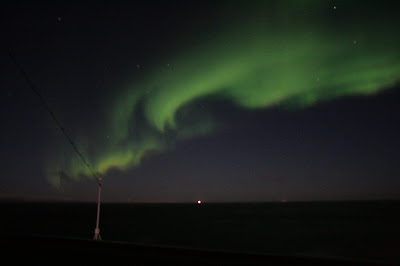
A friend keeps a Saturday paper for me and in return I keep him copies of the Times Crossword. I think it is a good bargain. At least I hope so since I have never completed a sudoku much less a crossword in my life. Seemingly those Bletchley Park heroes were chosen from aficionados who could complete a Times puzzle in something less than three minutes. I am guessing that the war was won not just by troops on the ground but by folk in huts pinpointing targets and first-guessing enemy actions. My old mum would probably have agreed. As a WAAF radar operative in that Hitler war she scanned the skies for signs of enemy bombers arriving from Norway. In four years of service, she only saw the one and recalled reporting the sighting to the sergeant who, disgracefully, took his time over a mug of Bovril before calling in the local Hurricanes, thus allowing the insurgent time to get away back to Trondheim. She rarely spoke about her war service except to say that once she was charged wi...

Runway 13 - By Duncan Harley

Image
Fatal aircraft crashes, often due to accidents in training, were fairly common in wartime.  Places such as Ballater, Aboyne and Logie Coldstone bear witness to the carnage.  In the October of 1943 for example, a Bristol Blenheim of 526 Fighter Squadron based at Inverness crashed on high ground at Morven. Both aircrew died. The pilot, a Welshman, was recorded as Flight Sergeant Douglas Evans and his wireless operator/air-gunner was named as Flight Sergeant Charles Baden from Derby. Another crash, this time of a Wellington bomber on a training mission out of Lossiemouth, occurred in 1942 high up in the hills behind Braemar. A gamekeeper out checking the deer herd at Glen Cluny eventually spotted the tail of the downed aeroplane sticking out of deep snow and alerted the local policeman. The eight aircrew had lain undiscovered for weeks and consisted mainly of New Zealander, Australian and American servicemen in training. Eventually, some 45 years after the tragedy, one o...

Life of Pi – by Duncan Harley

Image
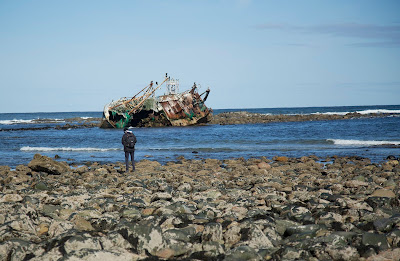
Todays news that officers from Fraserburgh Coastguard Rescue Team were called out to investigate reports of a sinking ship off Cairnbulg comes as no great surprise. Called into action by the HM Coastguard Operations Centre in Aberdeen following a report by a concerned walker the investigators quickly realised that the wreck was none other than the fishing vessel Sovereign, which had foundered off Cairnbulg in 2005. This is not the first time that the rusting wreck has made headlines. July 2014 saw the crew of the Fraserburgh lifeboat summoned to rescue the crew of the Sovereign only to discover that it had foundered some nine years before A member of the lifeboat crew told reporters that a tourist had been standing on Tiger Hill when she spotted the ship lying on its side on a reef. Scottish Television News reported that "She must have thought that it had just freshly sunk and made the call to the RNLI. It is a familiar landmark to locals but you can see how easy i...

Gordon Bennett - by Duncan Harley

Image
Well that’s me off to pen book three. The A-Z of Curious Aberdeenshire was a good first stab at the history of the north-east and, although I say it myself, made for a good follow-up on those well-researched Leopard Magazine features.   Next, of course, is The Little History of Aberdeenshire  - due out on March 1st - which I hope might make it onto the dusty bookshelves of those who appreciate popular history on a local level. With a working title of ‘Long Shadows – more tales from the north-east’, the next work is likely to include the Garvie murder, much more about Tomintoul and of course a take on Gordon Bennett. Gordon, of course, went on to found the New York Times while his well-loved son inspired the popular epithet ‘Gordon Bennett’. Garvie-wise, I have already been given a comment – which I may ignore - suggesting that sleeping dogs might lie. The participants are now graveside although one, Sheila, was until a few years ago often seen walking her dog alo...

Fording the Urie – By Duncan Harley

Image
I visited Old Rayne today. Not my favourite place to be honest since it brings back difficult memories. I lived in the village some years ago and when forced by chance to drive past it, I tend to avert my gaze and block out ghosts. But no matter. Little did I know that some decades on from a trip across the water – well the River Urie actually – a blast from the past would come back to haunt me. Wiki informs that ‘The River Ury is a small river in North-east Scotland situated in the Garioch area of Aberdeenshire. Its origins are close to Bennachie, approximately 25 miles to the northwest of Aberdeen. The river runs for approximately 15 miles before meeting the River Don at the south edge of Inverurie.’ And that would be about right. Mind you I am unsure about that spelling since the Urie appears within many local books as Ury and the source of the Don tributary is subject of debate. It’s a powerful river, despite its size, and over many years the Urie has meandered at wi...

Jamie Fleeman - by Duncan Harley

Image
Jamie Fleeman lies buried at Longside churchyard. Alongside the usual information one might expect to find on a gravestone are his last words which read “Dinna bury me like a beast”. Known far and wide as “The Laird of Udny’s Fool” Jamie was employed by a local laird who, alongside paying him to look after his geese, looked upon him as a kind of family jester. Described as having a “large round head with dull hair that stood on end giving the impression he had been scared out of his wits" , Jamie is specifically mentioned in various publications including the New Statistical Account of Scotland of 1845: “No offence is meant by introducing here the name of an individual who had a county - if not a national - reputation, and whose printed memorabilia have gone through several editions. This was Jamie Fleeman, the Laird of Udny's fool, who flourished here about the middle of last century. His name appears frequently in the session's list of paupers and his sayings and do...

The Woods of Blelack @ Logie Coldstone – by Duncan Harley

Image
Logie Coldstone in Aberdeenshire is home to the lost wells of Poldhu. Hidden deep within Woods of Blelack and fed by natural spring water, the granite-lined mineral baths at Poldhu were once a popular attraction for those seeking cures for virtually any ailment. Mentioned in the First Statistical Account of Scotland (1791-1799) they are described as: “a mineral spring in the parish of Logie Coldstone, a little to the south of the church, called Poldow, which in Gaelic, signifies a Black Pool, the water of which some years ago was much, and successfully, used for scorbutic and gravelish disorders”. By the time of the Second Statistical Account (1834-1845) interest appears to have waned and the wells at Poldhu were said to be “occasionally resorted to by some, for the benefit of their health, and by others for amusement”. With time, a 6ft high rhododendron thicket enveloped the wells and hid them from view. Recently however, interest in the historic site revived following...

Tiger Hill @ Cairnbulg

Image
July 2014 saw the crew of the Fraserburgh lifeboat summoned to rescue the crew of the fishing trawler ‘Sovereign’ which had run aground at Cairnbulg some nine years before. A member of the lifeboat crew told reporters that a tourist had been standing on Tiger Hill when she spotted the ship lying on its side on a reef.  "She must have thought that it had just freshly sunk and made the call to the RNLI."   "It is a familiar landmark to locals but you can see how easy it would be for a visitor to mistake it for a vessel in distress" he continued "It was a mistake made with the best of intentions." The Banff-registered trawler had in fact run aground during a storm in December 2005 with the five fishermen on board being airlifted to safety. The rusting wreck later made international headlines when it made a surprise appearance on a promotional cinema poster for the Hollywood movie Life of Pi. The blockbuster, an adaptation of a Yann Martel novel, featu...

School for Scoundrels

Image
The snagging list for the next book pounds on. Off for an edit, the new tome – to the best of my knowledge – has but three embarrassing bloopers. Not so last night’s blog about Dracul, which had just the two. Fortunately, both Dacre Stoker and J.D. Barker were forgiving and, following a wee hint, suitable amendments were made to the inaccurate portions of the piece. That’s the essence of the blogging problem really. Bloggers generally have no editor. You write, publish and generally wing it. Unless readers take umbrage, or better still make suggestions, the blogosphere relies on feedback and hopefully kind words. I don’t as yet have a cover image for the new book, but here – in the hope of some pre-publication appreciation – is an extract … “In his circa AD 98 biography of his father-in-law Agricola, Tacitus records amongst other things the victory of the Roman general Agricola’s armies over the Barbarian hordes of Caledonia. Much has been made of the fact that, although...

When Huntly was Hadleyville - By Duncan Harley

Image
Not may folk know it, but there is a cowboy-town just outside Huntly. Not that you would likely stumble across it by accident of course. Hidden in full view alongside some minor road linking Tranquillity with Huntly, the wild-western village hosts a graveyard appropriately named Boot Hill. There are no genuine graves here, only empty headstones made of wood, but visitors to Tranquillity kind-of-generally get the drift. Boot Hill is of course full of those folks ‘hung by mistake’ and ‘shot at noon cause he stole a horse’. The carved markers speak of bank-robbers and cattle rustlers who, in some far dreamland took that step too far and suffered the indignity of a good bit of neck-stretching after shooting the Sherriff. Not that Huntly is a stranger to the wild west. In far off days The Bruce ravished the land in what became known as The Hership Of Buchan. Burning and slaying as he went the somewhat nasty man ensured loyalty via the sword. The early American settlers must ...

The Royal Poo @ Ballater – By Duncan Harley

Image
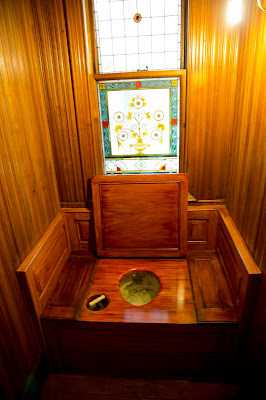
The timber-built railway station at Ballater was frequented by the Royal Family in the days when the journey north to Balmoral involved rail travel. When the Deeside line closed to passengers in 1966 the building found new use as shop units and even incorporated a Tourist Information Centre and a restaurant. Prior to the disastrous 2015 fire, a part of the building was turned into a museum and visitors could, if they were lucky, meet up with a mannequin dressed as Queen Victoria’s loyal ghillie John Brown on the station platform. A second mannequin representing an ageing Victoria, complete with mourning dress, could be seen taking tea in the private Royal Apartments of the station building. Those Royal Apartments naturally featured a Royal Loo. Thunder-box in form and with an ornately decorated porcelain pan, replete with Acanthus leaves and brightly painted woodland flowers, the loo was off limits to ordinary travellers during Victoria’s time. In more recent times however, s...

Stone Stacks down by the Don – By Duncan Harley

Image
I had hoped to go zip-wiring down Union Street at the weekend. It’s something of an occasional passion and although I hate the blatant uncontrollability of rib-ticklers and roller-coasters, the prospect of dangling dangerously from a swinging cable whilst travelling at speed over difficult terrain somehow fills me with joy. Aviemore and Perthshire have been my previous zip-wire haunts and a quick enquiry to the city council elicited the underwhelming response that ‘We won’t have the zipwire installed on union street In Town Without My Car Day.’ It was an omen. In the event, The Scottish Samurai Awards over at Maryculter House Hotel took prominence and I reported on this at length @: https://duncanharley.blogspot.com/2018/09/the-scottish-samurai-awards-by-duncan.html As it turned out, the Union Street zip-extravaganza was cancelled on the day due to inclement weather although all was fine over at Maryculter. In a quite separate piece of disappointing street-theatre, it s...

The Scottish Samurai Awards 2018 – By Duncan Harley

Image
The four-star Maryculter House Hotel was today the venue for the Scottish Samurai Awards. Scotland and Japan have long enjoyed both trade and cultural links – well for just around 150 years in truth. Japan sent many students to the UK between the late Edo period (1603-1867) and the early Meiji period (1868-1912) in order to explore and import Western technology and the various international trade exhibitions of the 19 th and early 20 th Century provided useful platforms for the sharing of both scientific and aesthetic ideas. Cities such as Glasgow and Aberdeen provided ripe-pickings for the aspiring technologists and alongside acquisition of new skill-sets the two nations exchanged cultural and artistic aesthetics which continue to create broad-ripples to this day. Japan, of course, had participated in the second Glasgow International Exhibition in 1901. The Japan Pavilion was located near the main exhibition hall at Kelvingrove and there is a likelihood that Renni...