Posts

Showing posts with the label WW1

SADOMASACHISTIC FLOGGINGS @ COLLIESTON – by Duncan Harley
Image
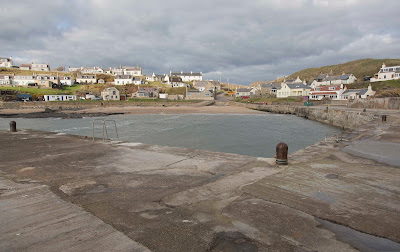
During the scorching hot summer of 1930, T.E. Lawrence - of Arabia fame - rented a harbour-side cottage over at Collieston . Seemingly, well after his Arabian adventures and his RAF sojourn he had become friendly with a fellow soldier, Jock Bruce from Aberdeen, whom he had met during a brief but relatively unknown period of service with the Royal Tank Regiment. Jock was from local farming stock and the adventurous pair apparently shared a healthy interest in sadomasochistic floggings.  A 1984 article in Leopard Magazine co-written by Diane Morgan and David Ross reveals the pairs craving for sexual gratification via punishment. “Jock Bruce himself seems to have no qualms about giving Lawrence his scuds” writes Diane. “Young and impressionable when they met, he saw himself as Lawrence’s bodyguard and valued what he regarded as their friendship – and by no means only for the extra cash it produced.” In her book ‘Six Buchan Villages’ local author Margaret Aitken relates that th...
The Terror Bombing of the Garioch - by Duncan Harley

Image
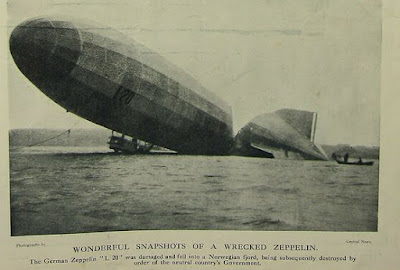
The editions of both the Aberdeen Free Press and the Aberdeen Daily Journal for Thursday May 4 1916 carried the news the war had finally arrived on Aberdeenshire’s doorstep in the form of aerial bombing by a German Zeppelin on the night of May 2nd. Headlines screamed “Terrific Noise of Crashing Bombs” and “Zeppelin at Rattray Head” alongside descriptions of up to 17 bombs having been dropped over the North-east in the course of the attack. Zeppelin raids were common over Southern England and the Continent but it had been assumed that North-east Scotland was well out of range of raiders, whose bases were around 12 hours’ flying time away in Germany. The usual targets for the German crews were naval and military bases, but in 1916, the art of night time bombing was uncertain at best, with many bombs falling on civilian areas. The airships mainly relied on navigation based on ground observation and bombs were often dropped by hand. There had been a raid on Scotland on 2 April ...

In Flanders fields the poppies blow - By Duncan Harley

Image
The Zulu wars were to take an awful toll on Aberdeen’s Gordon Highlanders and in years to come, the young men of the regiment were to be sacrificed on the poppy strewn plains of Europe not just the once but twice more. Miss Christie, as her pupils referred to her, seldom shared her feelings with her Dunnottar Primary class.  But her charges still recall her tears each year when, on the anniversary of the death of a brother who perished amongst the dense  blue clay  of  Flanders  fields, the entire class would be asked to recite John McCrae’s poignant poem ‘In Flanders Fields.’ I n Flanders fields the poppies blow Between the crosses, row on row, That mark our place; and in the sky The larks, still bravely singing, fly Scarce heard amid the guns below. We are the Dead. Short days ago We lived, felt dawn, saw sunset glow, Loved and were loved, and now we lie, In Flanders fields. Take up our quarrel with the foe: To you from failing hands we t...

The Muchalls Peace Sign – by Duncan Harley

Image
As the wreaths pile up alongside the War Memorials on this Remembrance Sunday and the bagpipes play Battle’s O’er at some 2,000 locations worldwide it seems appropriate to remember that Scotland has its own Little Cenotaph sitting, almost forgotten alongside the main railway-line between Newtonhill and Stonehaven. Muchalls is described in the 1884 edition of the Ordnance Gazetteer of Scotland  as: “ a village in Fetteresso parish, Kincardineshire, with a station on the North-Eastern section of the Caledonian railway, 5 miles NNE of Stonehaven, under which it has a telegraph and post office”. The tiny settlement nowadays lacks a station but still sits alongside the railway-line which transported the men from the towns and the villages of Aberdeenshire to the battlefields of France and Belgium. Charles Dickens is said to have described the village as a remarkably beautiful place and there are dark tales of a long-lost smuggler’s cave, haunted by a Green Lady, linking Muchals C...

The Michelin Guide to Ypres - by Duncan Harley

Image
In the aftermath of the 1914-18 conflict, large swathes of Europe lay in ruins and the detritus of war littered the fields of France and Belgium. There was no longer much demand for tin helmets or barbed wire but battlefield tourism became popular just as it had after Waterloo and Culloden. Early visitors to the likes of Waterloo and Culloden were of course after second hand memories - photography had not yet been invented but battlefield tourists included Lord Byron, Sir Walter Scott and Victor Hugo who no doubt visited in hope of inspiration for their drawing or writing. Even Thomas Hardy got in in the act. In a more modern day, folk buy guided tours to the D-Day beaches and gloat upon Hitler's west-wall and those preserved Berlin ruins. I came across The Michelin Guide to Ypres  recently. It’s just one of a series published by the tyre company just a year after cessation of hostilities. A friend has an original copy dating from not long after the conflict. Published...

Far, Far from Ypres

Image
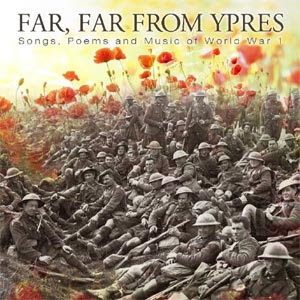
To my complete surprise and astonishment that’s a short story of mine heading towards the Aberdeen stage in a few weeks. And I have to say that I am humbled. A call for entries came via Rachel Campbell at APA and after a day or so I got to thinking that, although I have no realistic idea regarding how to even pronounce Ypres, I do have an intimate store of first war recollections albeit at second, third or even at fourth hand. A grandfather, now long missed, left a family story regarding his first war experience. A regimental quartermaster, or so he had us all believe, he recalled only that following a long and muddy march through France and then Belgium he played some football then marched all the way back to Glasgow. I have his war medals and one at least appears to be a military medal plus bar from his Black Watch experience. Based on a Greentrax double album of WW1 songs, Far, Far from Ypres is an acclaimed production of songs, poems and stories, following the terri...